Lecture
Judge Dennis Davis, Professor David Peimer, and Elisha Wiesel
Sunday 25.04.2021
Judge Dennis Davis, Professor David Peimer, and Elisha Wiesel
In Conversation
Sunday 25.04.2021
Summary
Elisha Wiesel, the son of Holocaust survivor and Nobel laureate Elie Wiesel, discusses his philanthropic work, including the Elie Wiesel Foundation’s programs, and shares personal anecdotes about his father. Elisha reflects on his upbringing, acknowledging the challenges of being the child of a Holocaust survivor, and describes his journey to finding his own identity while maintaining a deep connection with his father’s legacy.
Judge Dennis Davis
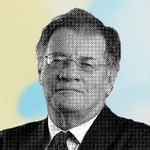
Dennis Davis is a judge of the High Court of South Africa and judge president of the Competition Appeals Court of South Africa. He has held professorial appointments at the University of Cape Town and University of the Witwatersrand, as well as numerous visiting appointments at Cambridge, Harvard, New York University, and others. He has authored eleven books, including Lawfare: Judging Politics in South Africa.
Professor David Peimer

David Peimer is a Professor of Literature, Film and Theatre in the UK. He has worked for the University of the Witwatersrand, Johannesburg, New York University (Global Division) and was a Fulbright Scholar at Columbia University. Born in South Africa, David has won numerous awards for playwriting and directing. He has most recently directed Dame Janet Suzman in his own play, Joanna’s Story, at London Jewish Book Week. He has published numerous books, including Armed Response: Plays from South Africa and the digital book Theatre in the Camps. He is on the board of the Pinter Centre (London), and has been involved with the Mandela Foundation, Vaclav Havel Foundation and directed a range of plays at Mr Havel’s Prague theatre.
Elisha Wiesel

Elisha Wiesel, son of Marion and Eli Wiesel, is a recovering Wall Street executive. Since retiring from a twenty-five-year financial markets career at Goldman Sachs at the end of 2019, he served in 2020 as one of the lead technologists in Mike Bloomberg’s presidential campaign. In his most recent board position at Good Shepherd Services, Elisha raised millions of dollars for New York’s neediest by convening “Midnight Madness,” where hundreds of finance professionals stayed up all night solving elaborate puzzles on the city streets. When his father passed, Elisha realized how many others missed his voice––and so, when opportunities for impact arise, Elisha shares his father’s message and continues his legacy by standing up for persecuted communities. In the last few years, Elisha has spoken at the United States Holocaust Memorial Museum about the need to protect the LGBTQ community; shining a light while speaking at Auschwitz on the plight of Syrian refugees being denied Western asylum; written for the Financial Times about the urgency of upholding DACA; and taken his son to peacefully march for Black Lives. Elisha’s words and actions mark him as an emerging fighter against poverty, advocate for an opportunity, and student of Jewish continuity.
Great question. We just honored my mother’s 90th birthday recently. She grew up in Vienna. She remembers the standing there with her father as the Nazis marched in. She was a refugee all across Europe, ending up in a camp called Gurs, which thankfully she and her sister and mother escaped before all the occupants were sent to Auschwitz. She spent the rest of the war in Basel. And then from Basel to the United States, she met my father in the 60s. They were introduced at a party in Manhattan. My mom is an incredible person in her own right. And her work on behalf of Ethiopian immigrants to Israel is really second to none.
I think about the fact that the amazing thing to remember about The Shoah is we can spend all of this time talking about how these people died. And we only spend 1/10 of the energy thinking about how they lived. My kids are going to remember a Shabbos dinner table of joy, of light, that we’re all together, that we have friends, and that there’s debate and discussion and singing. That is going to make a bigger difference to them in their desire, forget their ability, their desire to perpetuate Yiddishkeit, their literacy with what it means to be a practising Jew than all of the darkness I can show them about what The Shoah was.
My father had a great sense of humor.